
ESOP Solutions for Construction Businesses
See how we create shareholder focused solutions through employee ownership.





Build a Legacy While Securing Your Construction Firm's Future
By designing tailored solutions and securing competitive financing, we enable business owners to create a succession plan that not only protects their investments but also empowers their employees. Let us help you turn your vision into a reality while fostering a culture of ownership and commitment.
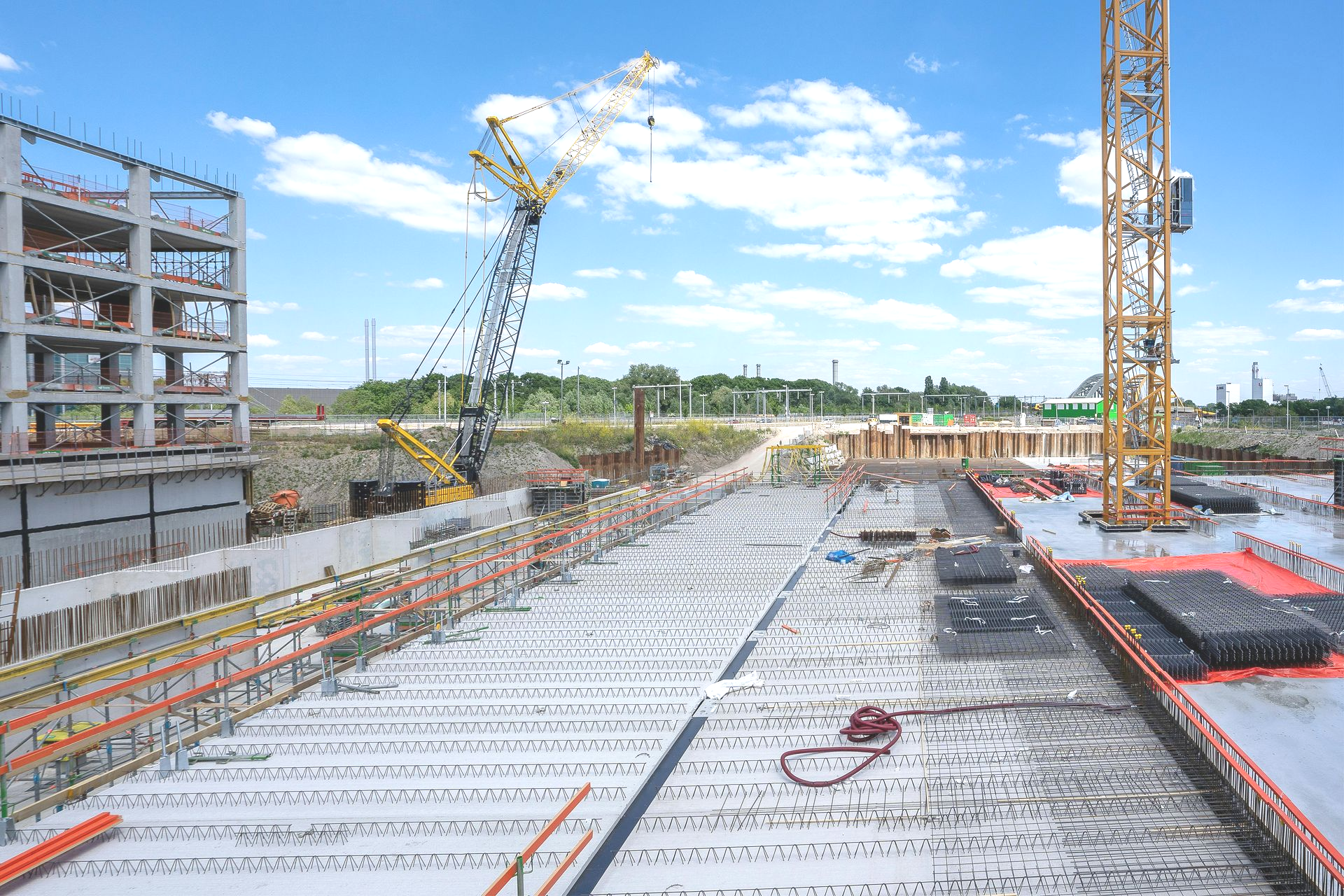
Understanding a Construction Firm's Unique ESOP Advantage
As a construction business, you face distinct challenges that generic business advisors often miss. Your equipment fleet, bonding capacity, and public sector relationships represent specialized value that requires careful protection during ownership transitions.
Why Forward-Thinking Construction Businesses Choose ESOPs
Protect Fleet Investment
Your extensive equipment assets represent significant capital investment. An ESOP structure helps optimize fleet-related tax advantages while maintaining operational flexibility for upgrades and replacements.
Maintain Agency Relationships
Your relationships with DOT officials, municipal engineers, and other public sector decision-makers are invaluable. An ESOP helps preserve these connections while ensuring project continuity.
Strengthen Bonding Capacity
Infrastructure projects require substantial bonding. Our ESOP structures are designed to maintain or enhance your surety relationships through improved financial positioning and clear succession planning.
Retain Project Leadership
In an industry where experienced project managers and superintendents drive success, ESOPs create compelling incentives for key team members to remain committed to your company's future.
Industry-Focused Expertise That Makes a Difference
Our specialized knowledge covers:
Value Drivers That Matter
- Service contract valuation
- Technical workforce retention
- Certification preservation
- Manufacturer relationship protection
- Design-build capabilities
Implementation That Works
- Uninterrupted service delivery
- Protected client partnerships
- Enhanced team engagement
- Strategic licensing transitions
- Optimized contract renewal cycles
Your Path Forward
- Assessment We evaluate your specific situation, including fleet assets, project portfolio, and agency relationships.
- Strategy Development Our team creates an ESOP structure that enhances your operational strengths while maximizing available benefits.
- Implementation Experience-backed execution ensures project continuity throughout the transition.
- Ongoing Support We provide continued guidance to help maintain momentum and capture new opportunities.
Ready to explore your options? Call us at (800) 964-8681 or email info@tenoresop.com for a confidential discussion.
What is an ESOP?
An ESOP is a qualified retire plan that invests solely in the stock of the sponsoring company. Over time, employees accumulate shares, which they can cash out upon retirement, departure, or under other circumstances defined by the plan.
How does an ESOP work?
- Formation of the ESOP Trust: A company sets up an ESOP trust, which will purchase the shares on behalf of employees. The company typically funds this trust through future earnings.Financing the ESOP: The ESOP trust can buy shares solely through future earnings or by borrowing money. The company then repays the loan, with tax-deductible contributions, over time.Allocation to Employees: Shares in the ESOP trust are allocated to individual employee accounts, based on total employee compensation.Vesting Schedule: Employees earn the right to the shares over a vesting period, which can range from three to six years or more, incentivizing them to stay with the company.Exit and Distribution: When employees leave the company, retire, or otherwise separate, the company buys their shares back at fair market value, providing them with a significant retirement benefit.
Why should I consider an ESOP for my business?
- Succession Planning: ESOPs provide an orderly and flexible exit strategy for business owners who want to retire without selling to outside buyers.Tax Advantages: ESOPs offer substantial tax benefits. Contributions used to repay the ESOP loan are tax-deductible, and owners selling to an ESOP in a C corporation can defer capital gains taxes under certain conditions. An S-Corp ESOP structure offers substantial tax advantages, including the ability to eliminate or greatly reduce federal income taxes, make deductible contributions to the ESOP, and potentially defer capital gains tax on stock sales through certain strategies.Employee Motivation and Retention: ESOPs can boost employee morale, productivity, and loyalty because employees have a direct stake in the company’s success.Preservation of Company Culture: Selling to an ESOP ensures that the business remains in the hands of those who understand and value its culture, which is often a key concern for founders.Access to Financing: ESOP-owned companies may have better access to financing due to tax advantages, which improve cash flow and make loan repayment more manageable.
What's the role of consultants for an ESOP?
Determining if an ESOP is a Good Fit
Have a different question?
Clients we have served
Shown here are some of our previous clients


Our Process
It all starts with a conversation. We can explore the possibilities together and see if an ESOP is the right move before progressing to the next stage.
01
Analysis, Modeling and Transaction Structuring
As we begin, we analyze and model the financial aspects of the transaction, including seller cash flows, financing structure, and tax benefits. We evaluate the company’s ability to support the transaction and compare the ESOP to other exit alternatives. This phase also helps define the objectives of the selling shareholders and key stakeholders so the transaction can be structured to maximize value, preserve flexibility, and achieve long-term goals.
02
Due Diligence & Transaction Coordination
Next, we assemble and coordinate the transaction team, bringing together the specialized professionals required to execute the transaction. This phase includes detailed due diligence, data collection, and preparation of the documentation necessary to support financing, trustee review, and transaction execution. Throughout the process, we work to position the transaction to achieve the objectives of the selling shareholders.
03
Financing, Transaction Execution and Closing
In the final phase, we coordinate the financing process, negotiate transaction terms, and manage the transaction through closing. This includes working with lenders, legal counsel, the trustee, and other parties to finalize documentation, satisfy closing requirements, and execute the transaction efficiently. Our focus throughout is to maintain momentum, reduce execution risk, and achieve a successful outcome for the selling shareholders.
What Our Clients Say
We are grateful for the team at Tenor ESOP Partners. From ideation to closing, the team’s deep knowledge and vast experience were critical for us to feel comfortable as we moved through each phase of the process. The end result is a win-win-win for our employees, our shareholders, and the Company. I can with great confidence recommend Tenor for anyone considering an ESOP as their ownership succession plan.
After having a solid two-year history as a 100% employee-owned company, I can say without hesitation that engaging with Tenor ESOP Partners proved to be a rock-solid decision by our management team. After extensive research, we chose Tenor due to their niche with middle market, closely-held companies representing a perfect fit for Astro Machine. In addition, they had over ten years’ experience specializing exclusively on ESOP’s as opposed to those firms advising on employee ownership as a service offering to simply supplement their core business. In hindsight, Tenor displayed extensive knowledge and was instrumental in a successful rollout including speaking directly to our employee population during inception, a presentation that was both informative and very well received. The process of establishing an ESOP comes with a degree of complexity. Tenor’s support in navigating that complexity proved robust and exceeded our expectations, both during the implementation process as well as our continued engagement after completion. Thank you to Tenor ESOP Partners. We look forward to a long and successful business relationship for many years to come.
When we started our investigation into employee ownership, we chose Tenor over two global consulting firms. We now know without a doubt that we made the right decision. The Tenor team’s guidance throughout our ESOP process was instrumental in helping us create a unique ESOP structure that is a win-win-win for our senior shareholders, junior shareholders, & Associates. Completing a complicated transaction of this nature requires deep subject matter expertise, broad market knowledge and extensive relationships with lenders and other professionals. Tenor brought us all of that and an efficient and thoughtful process. The owners, leaders and associates of ARCO were fortunate to have Tenor as a partner during our ESOP process and we couldn’t be more pleased with the results.
We partnered with Tenor during the early part of 2018 to pursue a sale of our digital marketing agency, Techwood Consulting, to our employees. We had been approached a number of times for acquisition and were aware of the many inherent challenges of selling to a third party, and so when we saw what Tenor had helped a peer company accomplish via an ESOP-based sale of the company, we became very interested. Tenor designed a customized plan that created powerful incentive structures for our employees, which included a strong performance-based plan for managers, and also assisted us in raising financing for the sale. I marvel at what the ESOP has done for Techwood and how Tenor orchestrated the entire process.

Tenor ESOP Partners was instrumental in providing guidance and advice throughout our ESOP experience. They were essential to helping us understand our options and executing a winning scenario for all stakeholders. We feel very good about the future for our company and employees, and we highly recommend the team at Tenor ESOP Partners for anyone considering an ESOP.